
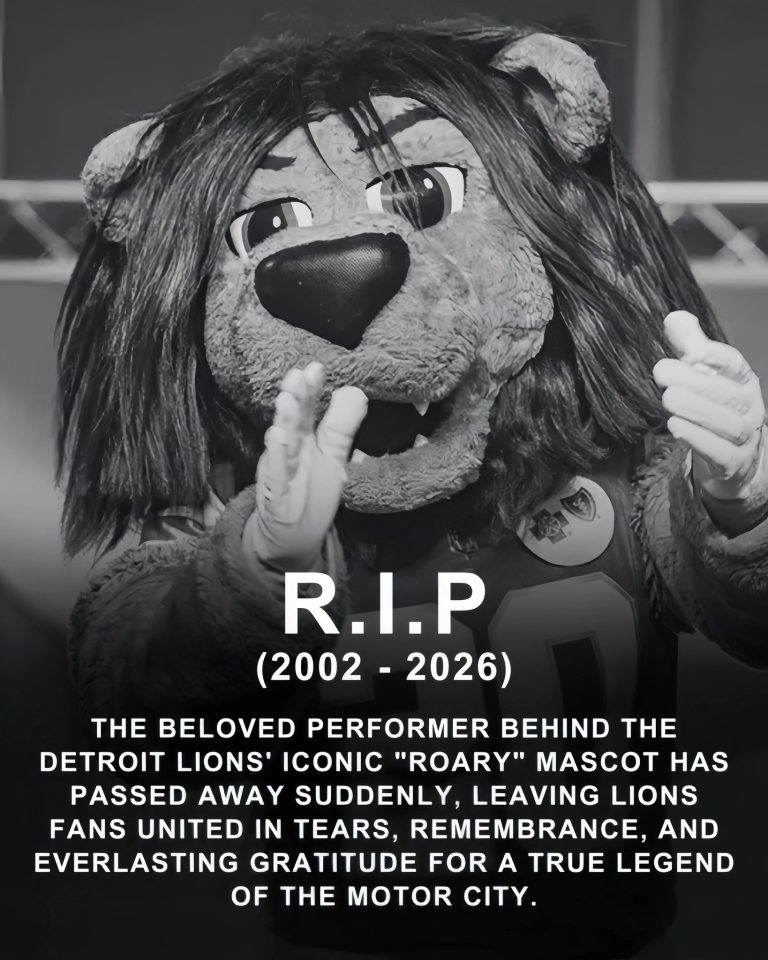
The Detroit Lions confirmed Tuesday that the performer behind Roary the mascot died suddenly following an accident, sending a wave of grief through players, staff, and fans alike.
Inside Ford Field, where cheers usually echo long after kickoff, there was instead a quiet heaviness. The building that once shook with laughter now felt stunned by loss.

For many in Lions Nation, Roary was more than a sideline entertainer. He was a ritual, a spark, a burst of joy woven into every touchdown celebration.
The announcement spread quickly across social media, leaving supporters searching for words to process the unexpected tragedy.
Though the organization did not immediately release the performer's name publicly at the family's request, teammates and colleagues described him as tireless, generous, and deeply committed to the role.
Behind the oversized paws and playful growls was a professional who studied choreography, rehearsed routines, and treated every appearance as an opportunity to lift spirits.
Mascot work is often underestimated, reduced to slapstick and spectacle. Yet those who knew him insisted it required athleticism, emotional intelligence, and relentless stamina.
He embraced that challenge wholeheartedly, seeing Roary not as a costume but as a responsibility.
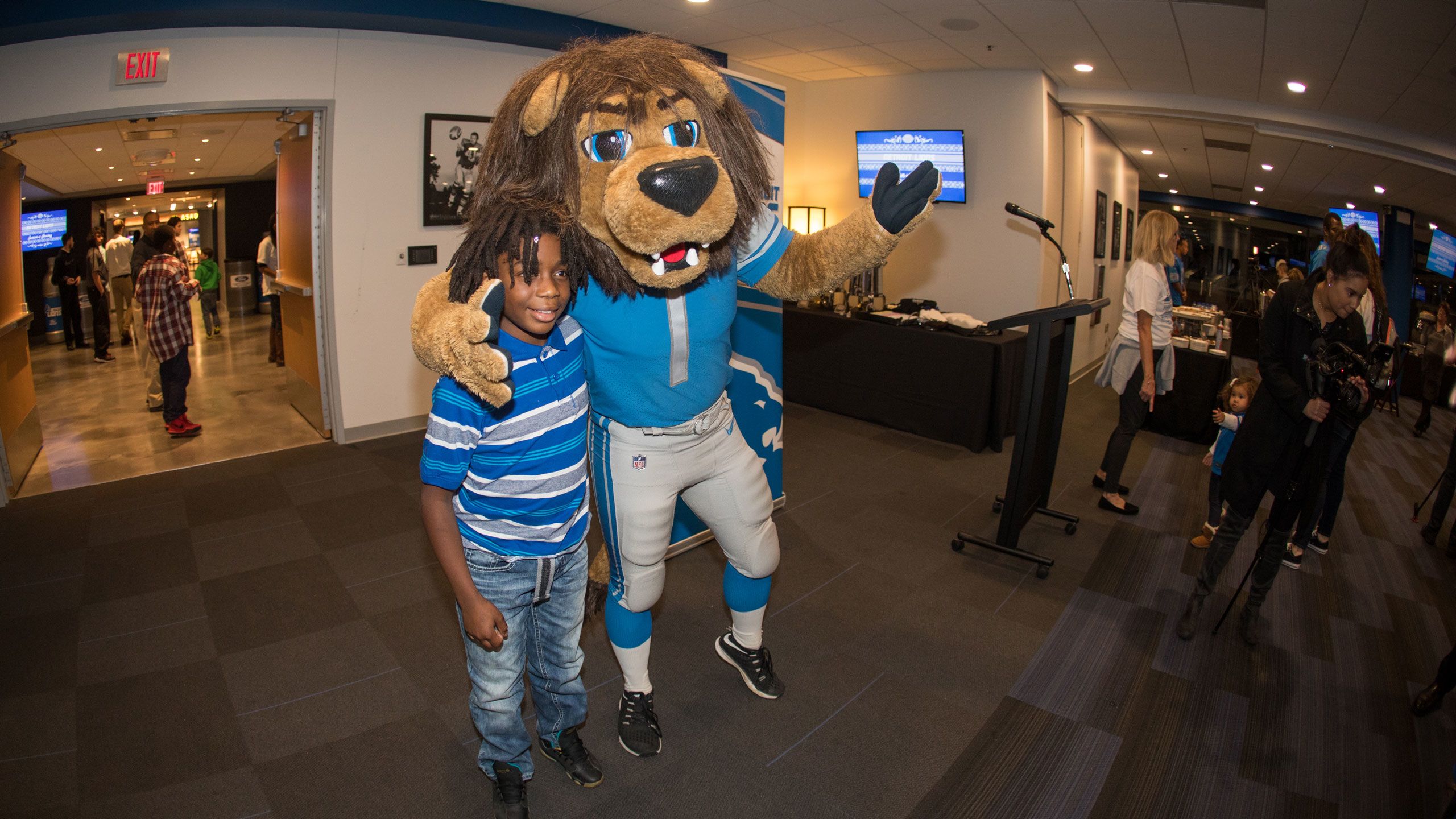
On game days, Roary sprinted across sidelines, rallied sections, and danced with children leaning over railings. But his work extended far beyond Sunday afternoons.
He visited hospitals, schools, and community centers throughout Detroit, often without cameras present. Children facing surgeries or difficult diagnoses found comfort in his animated presence.

For families navigating hardship, a high-five from Roary felt like recognition. It said: you matter here.
Those quiet visits now stand as part of a legacy few fully understood until this week.
The Lions organization has spent years reshaping its culture, emphasizing resilience and unity. Roary's performer was deeply embedded in that transformation.
Players described how he memorized their routines and inside jokes, tailoring skits that lightened tense moments before crucial games.
In a league defined by collisions and pressure, laughter became a form of relief. Roary's energy bridged locker room intensity and fan enthusiasm.
His absence leaves not just a visual gap on the field but an emotional one behind the scenes.
Details surrounding the accident remain limited, with team officials requesting privacy for the family while authorities complete their review.
What is clear is the suddenness. There was no prolonged illness, no gradual farewell. One day he was preparing appearances; the next, the news shattered routine.
Grief counselors were reportedly made available to staff and players, underscoring how deeply the loss resonated internally.
The shock rippled outward, touching thousands who had never known his name.
Within hours of the announcement, tributes flooded timelines. Fans shared photos of Roary dancing in aisles, posing with toddlers, or celebrating improbable victories.
Hashtags honoring the mascot trended regionally, with supporters describing how a simple wave or playful skit had brightened difficult weeks.
Season ticket holders recounted decades of memories, noting how Roary evolved alongside the franchise itself.
The digital memorial became a testament to how invisible labor can create visible joy.
Several Lions players posted emotional messages, describing the performer as a friend rather than a background figure.
One veteran wrote that Roary understood the mood of the team better than most analysts, stepping in with humor when tension threatened to fracture focus.
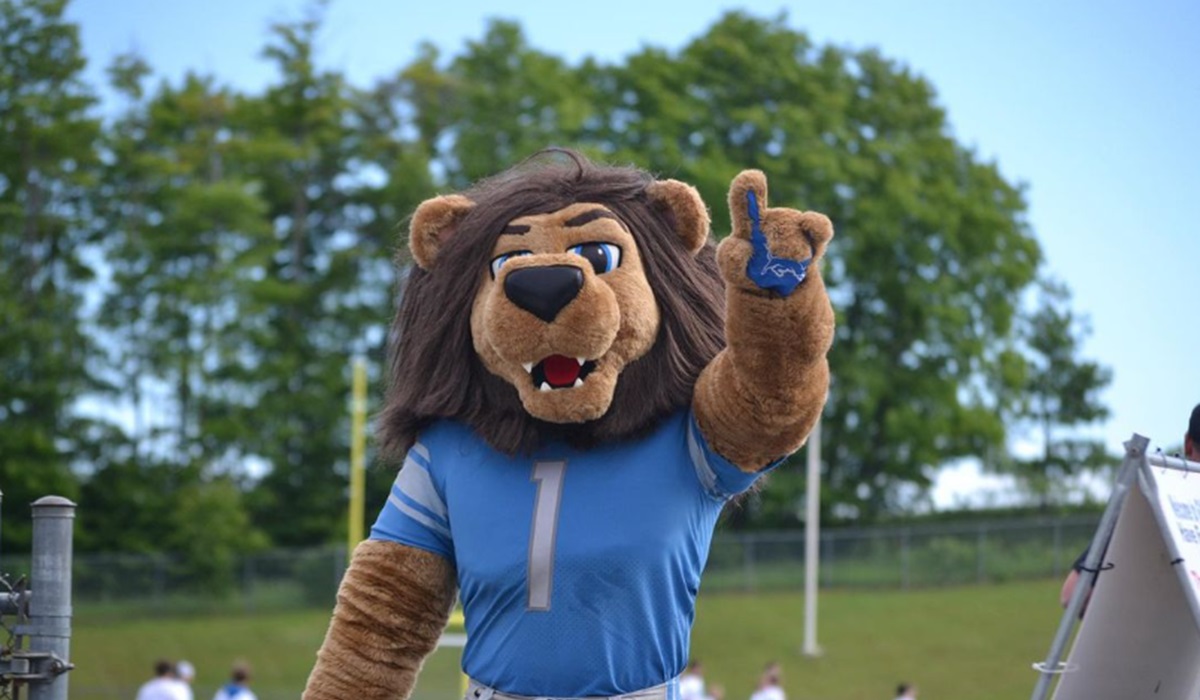
Another recalled late-night charity events where the performer stayed long after scheduled appearances ended, refusing to rush children who wanted photos.
Their words reframed the mascot not as sideline decoration but as a cultural pillar.
Professional mascot performance demands more than enthusiasm. It requires cardiovascular endurance, choreography precision, and the ability to communicate emotion without words.
Inside heavy costumes, temperatures rise quickly. Vision narrows. Movement becomes physically taxing over hours-long appearances.
Yet the performer rarely complained. Colleagues say he treated every show as if it were the Super Bowl, regardless of the scoreboard.
His dedication highlights a broader conversation about recognizing overlooked contributors within sports organizations.
Detroit has long understood resilience. Economic hardship, reinvention, and community pride shape the city's identity.
Roary's presence at parades, youth leagues, and neighborhood events became part of that shared narrative.

In moments when the team struggled competitively, the mascot remained a constant symbol of optimism.
Now, the city must reconcile that optimism with mourning, holding both gratitude and grief simultaneously.
What happens to Roary now? The organization has not announced immediate plans regarding the mascot's future appearances.
Some fans argue the character should continue, honoring tradition while recognizing the performer's contributions.
Others feel a temporary pause would allow space for collective mourning and respect.
The debate reflects how deeply intertwined the character and the individual had become in public perception.
Team officials indicated that upcoming games may include tributes, moments of silence, or commemorative patches recognizing the performer's impact.
Community leaders have suggested scholarship funds or youth program donations in his memory, extending his mission of joy into tangible support.

Fans have begun organizing candlelight gatherings outside Ford Field, turning sidewalks into spaces of remembrance.
In loss, a community is discovering how connected it truly is.
Eventually, the lights will brighten again. The crowd will rise, the band will play, and football will resume its familiar rhythm.
Yet something intangible will feel different. A corner of the field once animated by playful mischief will carry quiet memory.
The performer behind Roary gave Detroit more than halftime laughter. He offered consistency, warmth, and presence.
As Lions Nation looks ahead, it does so carrying gratitude for the unseen heart inside the costume—a reminder that even hidden faces can leave indelible marks.